
Notes from the work.

Essays on open science, health-state mapping, responsible AI, and what it actually takes to build research infrastructure in public.

Translucent molecular network in violet and azure.

The gap between where healthcare moonshots start and where they need to end

Ambitious health-AI projects often begin with a model and end with a demo. The harder, more valuable distance is from a promising result to infrastructure a whole ecosystem can trust, reproduce, and build on. A note on why we are starting with the foundation, not the headline.

Read full article
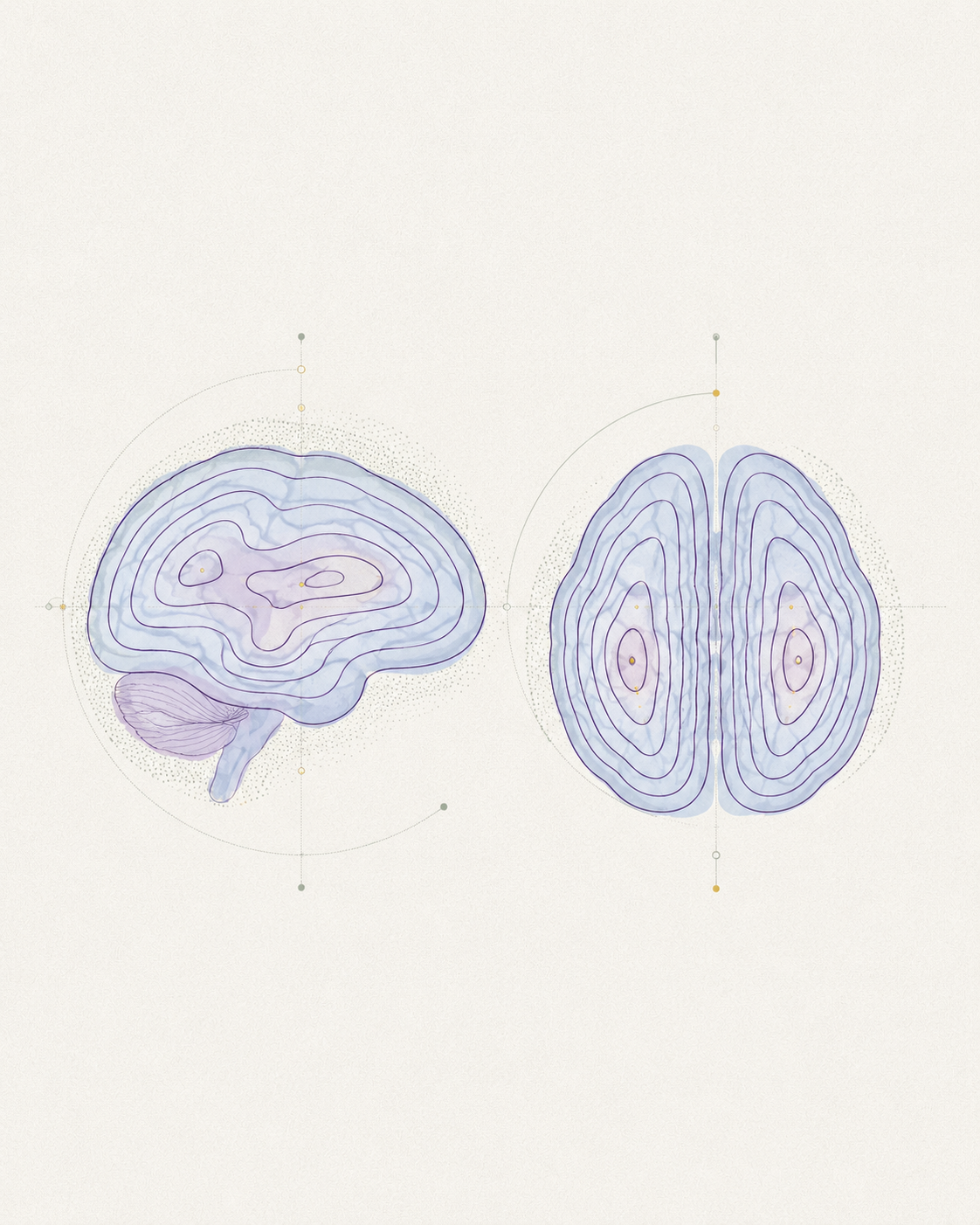

Brain contour map illustration

What we mean by a health-state coordinate

Position, trajectory, deviation from baseline, uncertainty, and evidence traceability: the five things every coordinate carries, and why each one matters.

Read more

Publishing the experiments that didn't work

Why negative results belong in the open record, and how we document them alongside the ones that did work.

Read more
Glass DNA helix illustration

Disease as trajectory: why a map changes everything

When you treat disease as a label to assign, you build different infrastructure than when you treat it as a trajectory to understand. The difference runs all the way down.

Read more

Cytognosis Foundation: nonprofit status confirmed

We have received 501(c)(3) recognition. A short note on what that means for the mission and what it doesn't change.

Read more
Wearable physiological signals illustration

Integrating wearable signals without overclaiming

How we handle physiological signals from consumer devices, including what we do when the data is noisy, incomplete, or not validated in research settings.

Read more

FAIR-compatible by default: our data architecture

Findable, accessible, interoperable, reusable: we explain how these principles are baked into the way we store and share every dataset and model artifact.

Read more

Biotypes, not diagnoses

Diagnostic categories name syndromes; biologically grounded subtypes point toward the variation that actually drives them.

Read more

Causal versus predictive AI in health

Prediction and causal inference are different problems with different requirements; conflating them produces unreliable infrastructure.

Read more

Privacy-first edge AI

On-device computation is a design principle that puts the person at the center of their own health data, not a limitation to work around.

Read more

Open weights are not enough

Releasing model weights is a good start; genuine openness requires training data provenance, evaluation code, model cards, and the negative results too.

Read more

Why a focused research organization

A mission-locked nonprofit can pursue long time horizons and full openness that neither academic labs nor commercial companies are structured to sustain.

Read more

From labels to continuous coordinates

Health exists on a continuum; infrastructure that treats it as a set of discrete labels loses information at every step of the science.

Read more

Why personal baselines matter

What looks normal for a population may not be normal for a specific person; meaningful change can only be detected against that person's own history.

Read more

Multimodal foundation models for health

Biology is measured in many modalities simultaneously; models that integrate them offer a richer picture of health state, but only if done carefully.

Read more

Equity-aware validation

A model that performs well on average can still perform poorly for specific populations; discovering that gap before deployment is an ethical requirement.

Read more

Reproducible by default

Reproducibility built into a pipeline from the start is far cheaper and more durable than reproducibility retrofitted as documentation after the fact.

Read more

Model cards and data cards

Structured documentation turns a model or dataset from an opaque artifact into something the broader community can evaluate and hold accountable.

Read more

Research with communities, not on them

The people whose lives are most affected by health research deserve a role in shaping it, not only in contributing data to it.

Read more

Cytognosis is research infrastructure and does not provide medical diagnosis, treatment, or clinical decision-making.